New York Insurance Appraisal: Laws, Scope, and Process
How New York Insurance Law sections 3404 and 3408 define appraisal, court involvement, panel authority, and the boundary between valuation and coverage.

Written by
Sarah PatchCo-Founder and Insurance Appraisal Writer
20 years across construction, design, and insurance-related work, including experience serving as an appraiser.
New York's Statutory Appraisal Framework
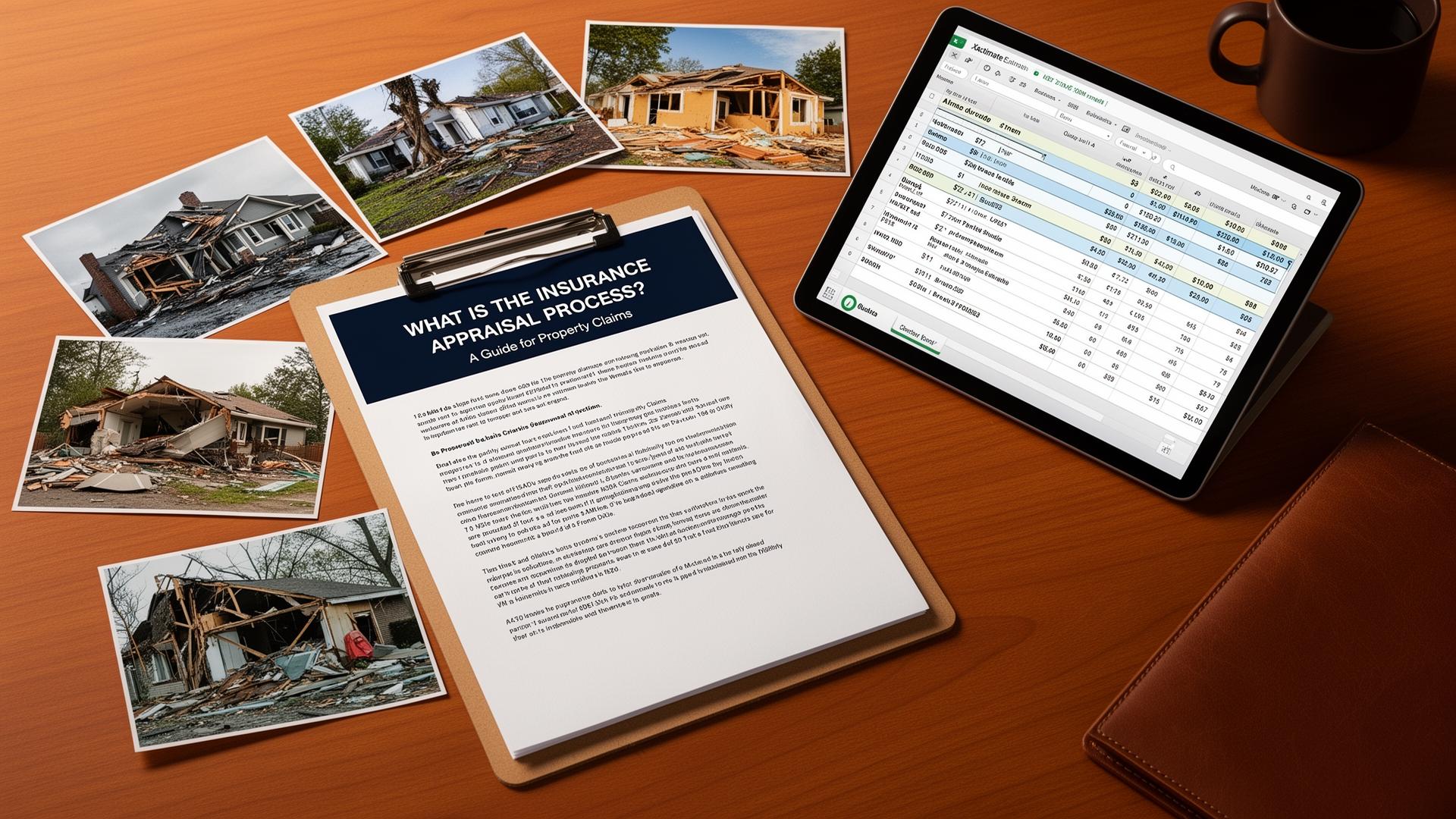
New York gives property insurance appraisal an unusually specific statutory foundation. Insurance Law section 3404 prints the state's standard fire policy. Its appraisal clause applies when the insured and insurer cannot agree on actual cash value or the amount of loss. A written demand starts a process in which each side names a competent and disinterested appraiser, the appraisers select an umpire, and agreement by any two panel members fixes the itemized value and loss.
Section 3408 adds a court procedure around that policy language. It identifies the courts that may appoint an umpire, requires five days' written notice of the application, and permits either party to seek an order directing the other to comply with an appraisal demand after a covered loss. That makes New York more than a state where appraisal happens only because a carrier chose to include a private clause.
Start with both the statute and policy
The statute supplies a floor for fire coverage, but endorsements and other property coverages can affect the operative wording. Read the complete issued policy before relying on a deadline or panel instruction.
What New York Appraisers May Decide
Section 3408(c) defines the panel's assignment with more precision than many state laws. Appraisal may determine actual cash value, replacement cost, the extent of loss or damage, and the amount of loss or damage as specified in the policy. That can require detailed decisions about quantities, repair methods, depreciation, pricing, and which claimed items show physical damage.
The same subsection draws a hard boundary. Appraisal does not determine whether the policy actually covers any portion of the claimed loss or damage. New York's Department of Financial Services gives consumers a similar explanation and says appraisal is not available to resolve disputes about the cause of damage. A panel may value covered damage without deciding whether an exclusion applies or whether a particular cause triggers coverage.
That distinction matters when an estimate disagreement hides a legal dispute. If the parties agree that a fire damaged a kitchen but disagree about labor and materials, appraisal fits the statutory job. If they disagree about whether water, wear, faulty work, or another excluded cause produced the damage, the coverage question does not become a valuation question merely because it affects dollars.
Demand, Panel Selection, and the Award
Under the standard form, a demand should be written and should identify a real disagreement over value or amount. Each side then selects a competent and disinterested appraiser and notifies the other within 20 days. The Department of Financial Services has explained that the statute does not expressly let one side reject the other's choice. A challenge to competence or disinterest is a factual matter for a court, not an informal veto by the opposing party.
The appraisers have 15 days to agree on a competent and disinterested umpire. If they cannot, section 3408 allows an application to a justice of the Supreme Court residing in the county or to a county judge where the damaged property is located. The application requires five days' written notice to the other party.
The panel must state actual cash value and loss separately for each item. If the appraisers disagree, they submit only their differences to the umpire. A written, itemized award signed by any two determines actual cash value and amount of loss. Each side pays its own appraiser and shares the remaining appraisal and umpire expenses.
What a New York Court Can and Cannot Do
Section 3408 gives courts two direct procedural roles. A court can appoint an umpire when the appraisers cannot agree, and it can direct a party to comply with an appraisal demand after a covered loss. Those powers keep the process from stalling, but they do not turn every appraisal disagreement into a summary proceeding.
The Appellate Division illustrated that limit in Matter of Perry v. Hanover Insurance Group in 2025. The parties already had an umpire, and the insureds wanted a court to direct how the panel calculated replacement cost. The court held that section 3408 did not authorize that requested relief. A dispute over the correct methodology under the endorsement required a plenary action rather than an order under the statute's appointment or compliance provisions.
Courts may also confirm, modify, or vacate an award through the applicable procedure, but review is not a second appraisal. A party should preserve legal objections without asking the panel to decide questions the statute reserves for a judge.
What to Review Before Demanding Appraisal
A useful demand begins with a defined valuation dispute. Gather the carrier's estimate, contractor estimates, photographs, measurements, inventories, depreciation calculations, prior payments, and the policy provisions governing loss settlement. Mark which line items are disputed and whether the disagreement concerns quantity, price, repair method, actual cash value, or replacement cost.
- Confirm that the insurer has accepted coverage for the damage to be valued.
- Read the appraisal clause, endorsements, suit limitation, and loss-payment terms.
- Send the demand to the address and in the manner required by the policy.
- Select an appraiser who can disclose relationships and explain a valuation method.
- Track the 20-day and 15-day periods if the standard form controls.
A public adjuster and an appraisal appraiser do different jobs. DFS licenses public adjusters to represent insureds in handling and negotiating claims. The appraisal panel's narrower task is to value the disputed loss. For more background on that distinction and the panel's basic mechanics, see the site's insurance appraisal process guide .
Regulator Help and the Practical Next Step
New York DFS publishes consumer guidance about adjusters, appraisers, and umpires and accepts insurance complaints. The Department can review whether an insurer is following New York law and the policy, but it does not replace a court on disputed legal rights or act as a party's appraisal advocate.
Before choosing a forum, write the disagreement in one sentence. If the sentence asks how much covered damage costs, appraisal may fit. If it asks whether the policy covers the damage, who breached the contract, or what an endorsement means, preserve that issue for the regulator, counsel, or a court. New York's statutes are detailed, but they do not erase that basic division.
Frequently Asked Questions
For a covered loss governed by the standard fire-policy appraisal provision, either the insured or insurer may make a written demand. Insurance Law section 3408(c) also allows either party to ask a court to direct compliance when the other side does not proceed. The issued policy and the covered-loss requirement still matter.
Insurance Law section 3408(c) permits appraisal to determine actual cash value, replacement cost, the extent of loss or damage, and the amount of loss or damage as specified in the policy. The panel cannot decide whether the policy provides coverage for any portion of the claimed damage.
The standard fire-policy form gives each side 20 days after a written demand to name a competent and disinterested appraiser. The appraisers choose a competent and disinterested umpire. If they cannot agree within 15 days, section 3408 provides a court-appointment procedure on five days' written notice.
Under the standard policy language, a written, itemized award agreed to by any two members of the panel determines actual cash value and amount of loss. Coverage, policy limits, deductibles, prior payments, and other legal issues can remain outside that valuation decision.
The standard form says each party pays the appraiser it selects and the parties share the other appraisal and umpire expenses equally. The issued policy should be checked for the exact cost language that applies to the claim.
Sources & Citations
- 1N.Y. Insurance Law § 3404, Standard Fire Policy, New York State Senate Open Legislation.
- 2N.Y. Insurance Law § 3408, Appraisal and Umpire Procedure, New York State Senate Open Legislation.
- 3Adjusters, Appraisers & Umpires, New York Department of Financial Services.
- 4OGC Opinion No. 05-04-24, Appraisal Clause, New York Department of Financial Services.
- 5Matter of Perry v. Hanover Insurance Group, 2025 NY Slip Op 01348, New York Appellate Division, Fourth Department.
Disclaimer
This New York guide is for general educational purposes only. It is not legal advice, a coverage opinion, or a prediction about any claim. Insurance rights depend on the issued policy, endorsements, facts, timing, and current law. Consult qualified counsel about a specific dispute.
🔍 Find Qualified Appraisers
Use our directory to compare insurance appraisers and umpires by location, role, listed experience, and specialty.
Browse Directory