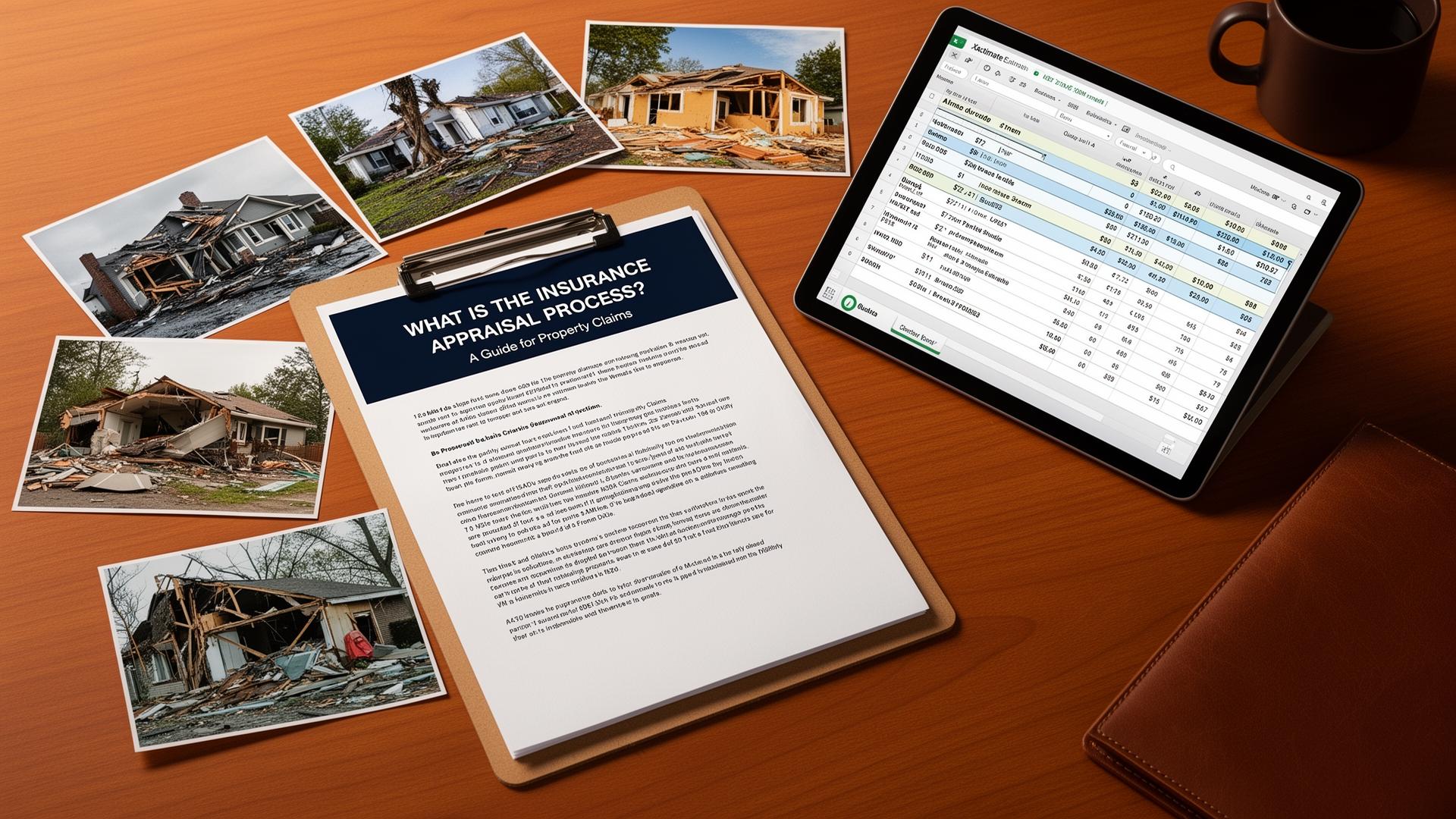
The Ultimate Guide to Insurance Appraisal in North Carolina
What the statute says, how courts have interpreted it, the Disaster Mediation Program, coastal wind pool claims, and how the process works — for policyholders, carriers, and the professionals involved in the process.

Written by
Sarah PatchCo-Founder and Insurance Appraisal Writer
20 years across construction, design, and insurance-related work, including experience serving as an appraiser.
North Carolina insurance appraisal quick reference, key facts under N.C. Gen. Stat. § 58-44-16
Legal Authority for Insurance Appraisal in North Carolina
North Carolina's property insurance appraisal framework is anchored in the state's standard fire insurance policy, codified at N.C. Gen. Stat. § 58-44-16. Unlike states that have enacted standalone appraisal statutes, North Carolina embeds its appraisal procedure directly in the mandatory policy language that every fire and property insurer must use.
The title of § 58-44-16 is misleading. It reads "Fire insurance policies," but North Carolina courts have extended its provisions, including the appraisal clause and the statute of limitations, to homeowners policies, standard commercial property policies, and other insurance contracts covering real property that incorporate the standard fire policy form, regardless of the cause of loss. The NC Court of Appeals established this in Page v. Lexington Insurance Co. (2006) and Marshburn v. Associated Indemnity Corp. (1987), and the Fourth Circuit provided the most comprehensive modern analysis in Skyline Restoration, Inc. v. Church Mutual Insurance Co. (2021).
"If the insured and this insurer fail to agree as to the actual cash value or the amount of loss, then, on the written demand of either, each shall select a competent and disinterested appraiser and notify the other of the appraiser selected within 20 days after the demand. The appraisers shall first select a competent and disinterested umpire; and failing for 15 days to agree upon a competent and disinterested umpire, on the request of the insured or this insurer, a competent and disinterested umpire shall be selected by a judge of a court of record in the state in which the property covered is located."
"The appraisers shall then appraise the loss, stating separately actual cash value and loss to each item; and, failing to agree, shall submit only their differences to the umpire. An award in writing, so itemized, of any two when filed with this insurer shall determine the amount of actual cash value and loss. Each appraiser shall be paid by the party selecting him and the expenses of appraisal and umpire shall be paid by the parties equally."
💡 Key Point
The appraisal clause is embedded in mandatory policy language. Insurers writing fire and property coverage governed by § 58-44-16 in North Carolina must include it. Neither party can unilaterally remove it from the policy. The provision preserves both the right to demand appraisal and the right to litigate, one does not waive the other. Note: surplus lines carriers and certain specialty policies may operate under different form requirements and may not be subject to the standard fire policy.
The Statute of Limitations: Three Years from Loss
The statute of limitations is one of the most consequential deadlines in North Carolina property insurance claims. Under N.C. Gen. Stat. § 1-52(12), the three-year limitation period for claims on policies governed by § 58-44-16 begins running on the date of loss, the date the property was damaged, not the date the insurer denies the claim. The current standard fire policy form at § 58-44-16(f)(18) requires that suit be commenced within three years after inception of the loss. Prior to 2009, the form contained a twelve-month limitation, but Session Laws 2009-171 amended the policy language to align with the three-year period under § 1-52(12). Additionally, N.C. Gen. Stat. § 58-3-35 independently prohibits insurers from limiting the time to commence suit to less than the period prescribed by law, providing a statutory backstop even if individual policy language were to attempt a shorter period.
This was definitively settled in Skyline Restoration, Inc. v. Church Mutual Insurance Co., where the Fourth Circuit held that a contractor who filed suit more than three years after hurricane damage, but within three years of the coverage denial, had missed the deadline. For property damage claims of any cause, the clock starts at the inception of the loss.
Practitioner note: The first question in any North Carolina property claim engagement should be: when did the loss occur? The appraisal process does not toll the statute of limitations, delays by any party do not extend the filing window. Policyholders nearing the three-year deadline should consider requesting a written tolling agreement or filing a protective suit. Carriers should be aware that delays on their end do not preserve the insured's right to litigate beyond the statutory period.
North Carolina Department of Insurance (NCDOI)
The North Carolina Department of Insurance, led by Commissioner Mike Causey (elected 2016, reelected 2020 and 2024), regulates all insurance activity in the state. Unlike Iowa's Insurance Division, which now directly licenses appraisers under SF 619, the NCDOI does not license or regulate property insurance appraisers. Its role in the appraisal process is indirect: it enforces the standard policy form, handles consumer complaints, and administers the Disaster Mediation Program.
NC Department of Insurance
State insurance regulator & consumer protection
Raleigh, NC 27604Mailing1201 Mail Service Center
Raleigh, NC 27699-1201
Appraisal vs. Arbitration in North Carolina
North Carolina treats appraisal and arbitration as distinct legal mechanisms. Appraisal resolves a single question: the dollar amount of loss. Arbitration, governed by the Revised Uniform Arbitration Act (N.C. Gen. Stat. Chapter 1, Article 45C), can resolve broader disputes including coverage, liability, and contractual interpretation. Conflating the two is one of the most common errors in property claims.
| Feature | Appraisal | Arbitration |
|---|---|---|
| Scope | Amount of loss & actual cash value only | Any dispute the parties agree to submit |
| Authority | Policy contract (§ 58-44-16) | N.C. Gen. Stat. Chapter 1, Art. 45C |
| Panel | Two appraisers + one umpire | Arbitrator(s) per agreement |
| Decision Standard | Agreement of any two binds | Arbitrator's reasoned award |
| Coverage Questions | Cannot decide coverage | Can decide coverage, liability, and more |
Can Appraisers Determine Causation in North Carolina?
This is one of the most contested issues in property insurance nationally, and North Carolina has relatively little case law on it. The standard policy language says appraisers determine "actual cash value" and "amount of loss." It says nothing about causation.
In practice, many appraisals in North Carolina involve hurricane, hail, or wind damage where causation and amount of loss are intertwined. If hail caused 50 shingles to need replacement but the carrier says only 20 were hail-damaged, is that a causation question or a valuation question? The line is blurry.
North Carolina courts have not issued a definitive ruling on whether appraisal panels can address causation. The general principle, consistent with the position taken in many jurisdictions, is that appraisal resolves value, not coverage. But in states with limited appraisal case law, this often creates a gray zone where experienced appraisers must exercise practical judgment about what falls within their authority and what should be reserved for the courts.
💡 Practical Reality
Most North Carolina property appraisals involve some implicit causation determination. An appraiser assessing storm damage must decide which damage was caused by the covered event in order to assign a value. Experienced practitioners handle this by itemizing damage attributable to covered causes and noting any items they excluded as outside their scope.
North Carolina Case Law on Insurance Appraisal
North Carolina has significantly less appraisal case law than states like Florida and New York. This scarcity can cut both ways: there are fewer guardrails, but also fewer precedents that restrict how the process operates. The decisions that do exist address foundational questions about when appraisal can be compelled and what deadlines apply.
Key developments in North Carolina insurance appraisal law
Hill v. Star Insurance Co. of America
200 N.C. 502 | North Carolina Supreme Court | 1931
An insured challenged an appraisal award on the grounds that the opposing party's appraiser was not truly independent. The North Carolina Supreme Court addressed for the first time what it means for an appraiser to be "disinterested" under the standard fire policy framework. The court held that the standard requires two things: the appraiser must have no pecuniary interest in the outcome, and the appraiser must be free from bias and prejudice toward either party. Meeting one prong without the other is not sufficient.
Young v. New York Underwriters Insurance Co.
207 N.C. 188 | North Carolina Supreme Court | 1934
An insured challenged an appraisal award, arguing that the opposing party's appraiser had a prior relationship with the insurer that should have disqualified him. Building on the disinterested standard established in Hill three years earlier, the North Carolina Supreme Court addressed the disclosure obligations of appraisers and the consequences of undisclosed prior engagements. The court held that an appraiser's history of prior work for the selecting party is a material fact that must be disclosed at the outset of the process. Disclosure at the beginning of the engagement protects the award's validity; failure to disclose creates grounds to challenge it.
Hailey v. Auto-Owners Insurance Co.
181 N.C. App. 677 | North Carolina Court of Appeals | February 20, 2007
An insured commercial property sustained damage from separate ice, wind, and fire events. The insurer made initial payments but later contended they were insufficient. The insured invoked appraisal, appointed an appraiser, and requested the insurer appoint its appraiser. The insurer filed a declaratory judgment action, arguing the demand was premature. In a case of first impression in North Carolina, the Court of Appeals held that the insured had not complied with its post-loss duties before invoking appraisal, specifically, it had not provided the insurer with documented quantities, costs, and values of the claimed loss. Without that exchange, no genuine bilateral disagreement existed, and the appraisals were premature and unenforceable.
N.C. Farm Bureau Mutual Insurance Co. v. Sadler
365 N.C. 178 | North Carolina Supreme Court | 2011
A homeowner's mold claim arose after windstorm damage allowed water intrusion into the residence. The insured's appraiser and the umpire certified an award of $162,500 for the mold damage, valued "as the result of wind." The insurer challenged the award, arguing it failed to separate covered wind damage from excluded mold damage and improperly made coverage and causation determinations outside the scope of appraisal. The trial court granted partial summary judgment to the insured based on the award amount. The North Carolina Supreme Court reversed, holding that genuine issues of material fact had to be resolved before the covered loss could be determined, specifically, how much of the appraised damage was directly caused by a covered peril versus the excluded mold growth.
Skyline Restoration, Inc. v. Church Mutual Insurance Co.
20 F.4th 825 | Fourth Circuit Court of Appeals | 2021
A restoration contractor, as assignee of a church's insurance claim, filed suit in federal court in November 2019 for property damage caused by Hurricane Matthew in October 2016. The carrier moved to dismiss on statute of limitations grounds. The Fourth Circuit affirmed dismissal, holding that the three-year limitations period under § 58-44-16 begins to run on the date of loss, not the date the insurer denies the claim or the date the parties reach an impasse. Because more than three years had passed between the October 2016 loss and the November 2019 filing, the claim was time-barred. The court also confirmed that § 58-44-16's provisions extend beyond fire insurance policies to all real property insurance in North Carolina.
Recent Development — First Protective Insurance Co. v. Rike
No. 4:22-CV-42-FL | U.S. District Court, Eastern District of North Carolina | October 12, 2023
First Protective sought to vacate a $1,036,000 appraisal award on a residential water leak claim, alleging the umpire had an undisclosed conflict of interest. The umpire was simultaneously serving as a paid consultant for the insured on a separate Hurricane Florence claim involving the same property and had an ongoing business relationship with both the insured's appraiser and her public adjuster. None of this was disclosed during eleven months of panel deliberations. The umpire moved to dismiss, arguing he was entitled to judicial immunity and discovery protection as an "arbitrator" under North Carolina's Revised Uniform Arbitration Act. The court denied the motion, holding that insurance appraisal is not arbitration under the arbitration act, and that the umpire was therefore not immune from suit or discovery. (District court order on motion for judgment on the pleadings, not a final merits ruling.)
Additional relevant case law includes Page v. Lexington Insurance Co., 177 N.C. App. 246 (2006), which confirmed that the limitation period and appraisal provisions of § 58-44-16 extend to homeowner's property insurance, and Marshburn v. Associated Indemnity Corp., 84 N.C. App. 365 (1987), which reached the same conclusion regarding standard homeowner's policies.
The Disaster Mediation Program
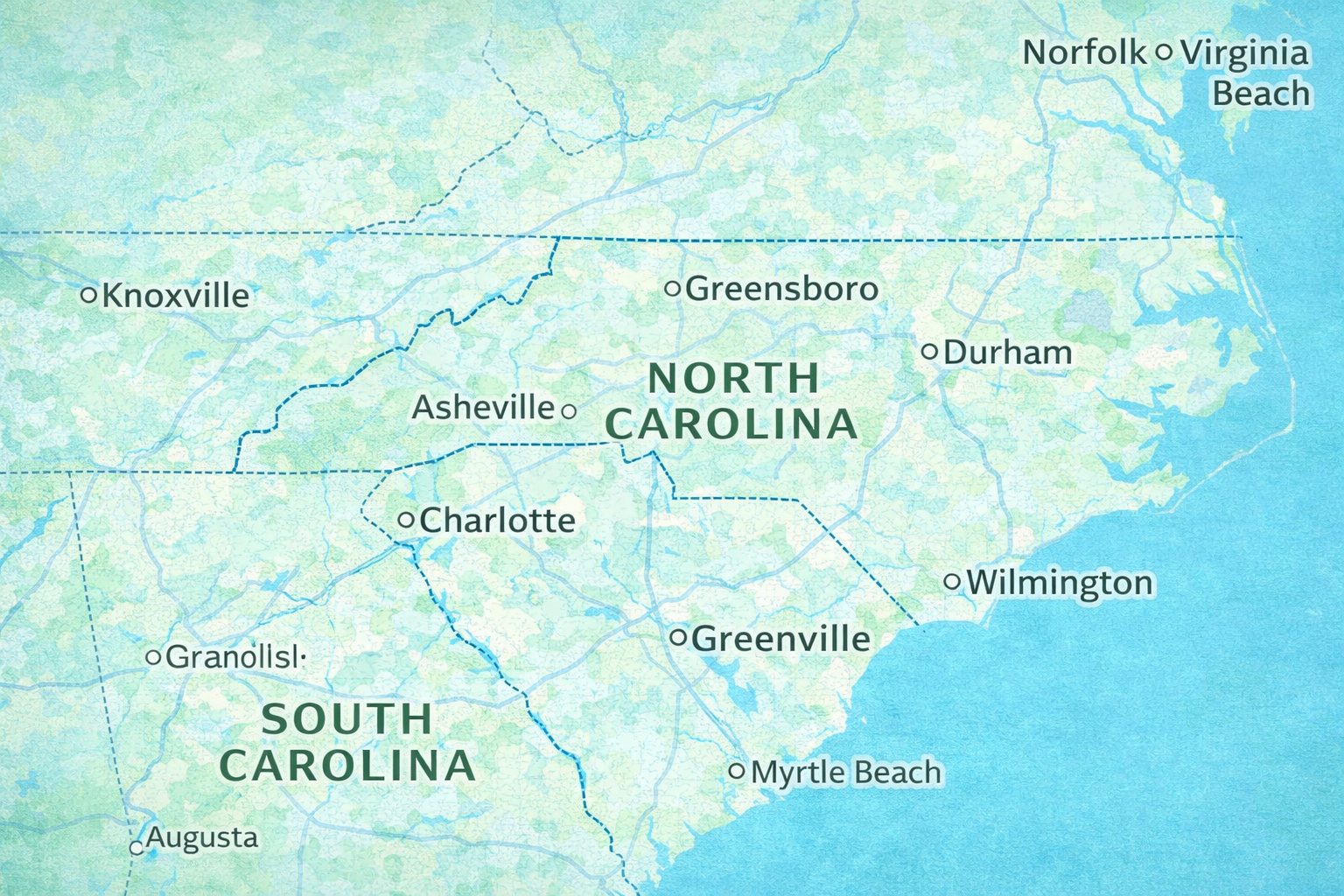
North Carolina is a hurricane state. Western counties face flooding and landslides, the Piedmont is exposed to severe thunderstorms and tornadoes, and the 18 coastal counties sit in one of the most hurricane-prone corridors in the United States. The legislature recognized that mass-disaster claims needed a structured resolution mechanism beyond the standard appraisal clause.
N.C. Gen. Stat. §§ 58-44-70 through 58-44-120 established the Disaster Mediation Program, which provides a state-supervised mediation process for residential property claims that have been partially or fully denied after a declared disaster. The program is administered by a qualified dispute resolution organization contracted by the NCDOI, the American Arbitration Association has served in this role.
Activation requires two preconditions: first, either the Governor or the General Assembly must proclaim a state of disaster for all or part of North Carolina under G.S. 166A-19.21, or the President must issue a major disaster declaration under the Robert T. Stafford Disaster Relief and Emergency Assistance Act, a presidential emergency declaration alone is not sufficient; second, the Commissioner of Insurance must issue an order activating the program. Most recently, Commissioner Causey activated the program after Hurricane Helene devastated western North Carolina in September 2024.
⚠️ Eligibility Requirements
The disputed claim must arise from the declared disaster. The total claim must exceed the consumer's deductible, and either the insured must be requesting at least $1,500 to settle the dispute or the difference between the parties' positions must be at least $1,500. The claim cannot have been denied solely due to a policy exclusion, policy condition, nonexistence of coverage at the time of loss, or an insurer fraud referral to its special investigative unit. The insured must request mediation within 60 days of the denial, but missing that deadline only bars the right to demand mediation; it does not prejudice any other legal right or remedy the insured may have. The program does not apply to commercial insurance or motor vehicle claims.
An important procedural note: a policyholder who has completed the appraisal process can still participate in the Disaster Mediation Program. However, a policyholder who has filed a lawsuit against the insurer is ineligible. The program is designed to complement, not replace, the appraisal process.
NCIUA and the Coastal Property Insurance Pool
Many property owners in North Carolina's 18 coastal counties carry two separate insurance policies: a standard homeowners policy (with windstorm excluded) and a separate windstorm and hail policy issued through the North Carolina Insurance Underwriting Association (NCIUA), also known as the Coastal Property Insurance Pool.
The NCIUA was created by statute (N.C. Gen. Stat. Article 45, §§ 58-45-1 through 58-45-90) to provide wind and hail coverage in areas where private insurers exclude it. The appraisal clause in NCIUA policies follows the same standard fire policy framework, either party can demand appraisal when there is a dispute over the amount of loss. But the claim logistics differ: the primary insurer, not the NCIUA, investigates and adjusts windstorm claims, and the NCIUA and primary insurer coordinate on adjustment expenses and payment.
This dual-policy structure requires policyholders to coordinate two separate claims processes: when a hurricane damages a home, the homeowner must work with both the primary carrier (for water intrusion, fire, and other perils) and the NCIUA/primary carrier (for wind and hail damage). Disputes about whether damage was caused by wind or water frequently arise, and appraisal panels for the windstorm policy can only assess the windstorm loss. An important distinction: if the homeowner also carries a separate flood insurance policy through the National Flood Insurance Program (NFIP), that policy is governed by federal law and its own claims process. NC appraisal procedures do not apply to NFIP flood claims.
Step by step
The North Carolina Insurance Appraisal Process
The standard appraisal process in North Carolina follows the framework established by the standard fire policy at § 58-44-16.
Standard property insurance appraisal process in North Carolina under § 58-44-16
Step 1: Written Demand
Either the insured or the insurer may demand appraisal in writing when they disagree on the actual cash value or the amount of loss. The demand should reference the policy's appraisal provision and clearly state that the party is invoking the process. The dispute should center on valuation, not coverage, though as discussed above, the boundary between causation and valuation is often blurry in practice.
Step 2: Appraiser Selection (20 Days)
After the demand, each party has 20 days to select a "competent and disinterested" appraiser and notify the other party. North Carolina does not require property insurance appraisers to hold a specific license. The standard is functional: the appraiser must be knowledgeable in property valuation and must have no financial interest in the outcome or prior entanglement with the claim. While NC case law (Hill, Young) has addressed the "disinterested" standard in some detail, the "competent" requirement remains largely undefined by the courts, parties should select appraisers with demonstrable experience in the type of property and damage at issue.
Step 3: Umpire Selection (15 Days)
The two appraisers have 15 days to agree on a competent and disinterested umpire. The base policy language at § 58-44-16(f)(14) authorizes either party to request selection by "a judge of a court of record in the state." N.C. Gen. Stat. § 58-44-35 provides the more specific procedural mechanism for that request: either party may petition a resident judge of the superior court in the district where the property is located. A 2013 amendment added procedural requirements: proof of notice to all parties must be filed with the court, at least 15 days must pass after filing, and either party may request a hearing limited to the umpire selection issue. This judicial backstop prevents the process from stalling when the appraisers reach an impasse on the neutral.
Step 4: Inspection and Appraisal
Each appraiser inspects the property and prepares their own valuation, stating separately the actual cash value and the amount of loss for each item. This is a critical step: the itemized format makes the award enforceable and transparent. Each appraiser should document their methodology, measurements, and pricing.
Step 5: Agreement or Umpire Decision
If the two appraisers agree, their written award is binding. If they cannot agree, they submit only their differences to the umpire. The umpire does not conduct a de novo appraisal, the umpire reviews the disagreements and resolves them. An award agreed to by any two of the three panel members (either both appraisers, or one appraiser and the umpire) is binding on the amount of actual cash value and loss.
💡 ACV vs. Replacement Cost
The appraisal panel determines actual cash value and the amount of loss. Whether the insured is entitled to replacement cost value, and whether depreciation is recoverable before or after repairs are completed, depends on the specific policy terms and is outside the scope of the appraisal itself. Policyholders should review their policy's loss settlement provisions carefully.
Step 6: Payment
Under the standard policy, the insurer's liability becomes payable 60 days after receiving proof of loss and the ascertainment of loss is made, either by written agreement between the parties or by the filing of an appraisal award. Both conditions must be satisfied: the insurer must have the proof of loss on file and the award must be filed. Each party pays its own appraiser. Umpire fees and appraisal expenses are shared equally.
⚠️ What If the Insurer Won't Pay the Award?
An appraisal award is binding on the amount of loss, but if the insurer refuses to pay or unreasonably delays payment, the policyholder may have additional remedies. North Carolina's Unfair and Deceptive Trade Practices Act (N.C. Gen. Stat. § 75-1.1) provides a private cause of action that may support a claim for treble damages. While § 58-63-15 (unfair claims settlement practices) does not itself create a private right of action, enforcement is reserved to the Commissioner, a pattern of violations can serve as evidence in a § 75-1.1 claim. If an insurer fails to honor an appraisal award, the insured may have additional remedies under § 75-1.1. Parties in this situation should consult a licensed North Carolina attorney.
Search the InsuranceAppraisal.com Directory
Qualified appraisers and umpires in North Carolina, searchable by location, specialty, and experience. The directory serves policyholder representatives, carrier representatives, and neutral umpires.
Find an Appraiser or UmpireReference
Resources & Primary Sources
The primary legal and regulatory sources referenced throughout this guide. All links point to official government sites, court databases, or established legal research platforms.
Frequently Asked Questions
Yes. Under the standard fire policy incorporated in N.C. Gen. Stat. § 58-44-16, an award agreed to by any two of the three panel members (two appraisers and one umpire) is binding on the amount of actual cash value and loss. The award can generally be challenged only on narrow grounds such as fraud, bias, or material misconduct by a panel member, though North Carolina has limited case law defining these standards specifically.
No. North Carolina does not require a specific license for property insurance appraisers. The standard policy requires only that each appraiser be "competent and disinterested." Motor vehicle damage appraisers, by contrast, must hold a separate NC MVDA license from the Department of Insurance.
Three years from the date of loss. Under N.C. Gen. Stat. § 1-52(12), the limitation period for claims on policies governed by § 58-44-16 runs from the inception of the loss, not from the date the insurer denies the claim. North Carolina courts have confirmed that insurers cannot shorten this deadline through policy language.
Established by N.C. Gen. Stat. §§ 58-44-70 through 58-44-120, the Disaster Mediation Program allows policyholders whose residential property claims have been partially or fully denied after a declared disaster to request mediation with an independent mediator. The Commissioner of Insurance must activate the program by order following a gubernatorial or legislative proclamation under G.S. 166A-19.21, or a presidential major disaster declaration under the Stafford Act. The insured must be requesting at least $1,500 to settle the dispute, or the difference between the parties' positions must be at least $1,500.
The two party-appointed appraisers first attempt to agree on a competent and disinterested umpire. If they cannot agree within 15 days, either the insured or the insurer may petition a resident judge of the superior court in the district where the covered property is located (N.C. Gen. Stat. § 58-44-35). A 2013 amendment requires proof of notice to all parties and allows either party to request a hearing on the selection.
Sources & Citations
- 1N.C. Gen. Stat. § 58-44-16 — Standard Fire Insurance Policy, NC General Assembly.
- 2N.C. Gen. Stat. § 58-44-35 — Judge to Select Umpire, NC General Assembly.
- 3N.C. Gen. Stat. § 1-52 — Three-Year Statute of Limitations, NC General Assembly.
- 4N.C. Gen. Stat. § 58-3-35 — Limitation of Actions, NC General Assembly.
- 5Hill v. Star Insurance Co. of America, 200 N.C. 502 (1931), NC Supreme Court.
- 6Young v. New York Underwriters Insurance, 207 N.C. 188 (1934), NC Supreme Court.
- 7Hailey v. Auto-Owners Insurance, 181 N.C. App. 677 (2007), NC Court of Appeals.
- 8N.C. Farm Bureau Mutual Insurance Co. v. Sadler, 365 N.C. 178 (2011), NC Supreme Court.
- 9Skyline Restoration, Inc. v. Church Mutual Insurance Co., 20 F.4th 825 (4th Cir. 2021), Justia.
- 10First Protective Insurance Co. v. Rike, No. 4:22-CV-42-FL (E.D.N.C. 2023), U.S. District Court, E.D.N.C.
- 11NC Department of Insurance — Disaster Mediation Program, NCDOI.
- 12NCIUA — Coastal Property Insurance Pool, NC General Assembly.
- 13Brelly NC Property Claims Guide, Brelly.
Disclaimer
This guide is published by InsuranceAppraisal.com for educational purposes only and does not constitute legal advice. Insurance appraisal law varies by policy language, jurisdiction, and facts. Statutes and case law cited are current as of the publication date but may change. Consult a licensed North Carolina attorney for advice on your specific claim. InsuranceAppraisal.com is not a law firm and does not provide legal representation.